
Why Is Lithium Ore Digestion Necessary?
Lithium ore is an important raw material for lithium resource development and the production of new energy materials. Its chemical composition and elemental content directly affect ore quality evaluation, resource utilization, and the optimization of subsequent metallurgical processes.
During the elemental analysis of lithium ore, analytical instruments such as ICP-OES (Inductively Coupled Plasma Optical Emission Spectrometry) and ICP-MS (Inductively Coupled Plasma Mass Spectrometry) are commonly used to determine lithium and other relevant elements in the samples.
However, lithium ore is a complex solid mineral material that may contain silicate minerals such as spodumene and lepidolite. These minerals have relatively stable structures, and some components are difficult to dissolve directly. Therefore, appropriate sample preparation methods are required to convert solid ore samples into homogeneous and stable liquid solutions before instrumental analysis.
The primary purpose of digestion is to break down the mineral matrix and release target elements into solution, providing a reliable basis for subsequent elemental analysis. Digestion efficiency directly affects elemental recovery and the accuracy of analytical results.
Challenges of Traditional Lithium Ore Digestion Methods
Traditional mineral sample digestion methods commonly include hotplate heating and open-vessel acid digestion, in which samples are heated with acids for an extended period to dissolve mineral components.
However, when processing lithium ores with complex structures and high chemical stability, conventional digestion methods may present several challenges.
1. Long Digestion Time
Traditional heating methods rely primarily on external heat transfer to promote reactions between the sample and digestion acids. The heating and reaction processes are relatively slow. Refractory minerals often require prolonged heating, reducing overall laboratory efficiency.
2. Incomplete Dissolution of Certain Mineral Components
Silicate minerals in lithium ore have relatively stable structures. Conventional acid treatment may not sufficiently break down their mineral lattices, potentially leaving undissolved residues that can affect subsequent elemental analysis.
3. Potential Loss of Volatile Components
During open-vessel digestion, prolonged heating may cause acid evaporation. Certain volatile components may also be lost during the process, potentially affecting analytical accuracy.
4. Limited Control Over Experimental Conditions
Traditional heating methods have certain limitations in temperature control, reaction consistency, and batch sample processing. These factors may result in variations in digestion performance between different sample batches.
In comparison, microwave digestion systems use a closed-vessel digestion environment. Microwave heating rapidly increases the temperature of the digestion solution, promoting reactions between the sample and acids under controlled temperature and pressure conditions. This helps improve digestion efficiency and experimental consistency.
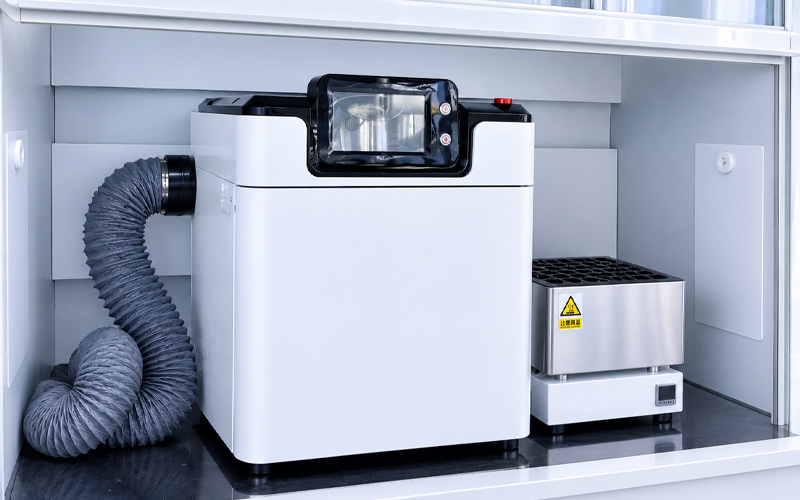
Introduction to the WMD1200 Microwave Digestion System
The WMD1200 is a multi-vessel microwave digestion system in the Welso WMD600 Series, capable of accommodating up to 12 digestion vessels simultaneously. It is suitable for sample preparation in geological and mineral analysis, metallurgy, food testing, environmental analysis, and other laboratory applications.
The system features a 316L stainless steel structure with a PFA coating, providing good corrosion resistance. Temperature monitoring is performed using a non-contact infrared sensor that scans and monitors each digestion vessel individually. The temperature control range is 50–400°C.
Pressure monitoring also uses non-contact sensors to scan and monitor each digestion vessel individually, with a pressure control range of 0–15 MPa.
For operational safety, the WMD1200 is equipped with explosion-proof sensors, an external emergency stop button, and a dual independent door interlock sensing system. Microwave output is automatically stopped if the door is not completely closed. The digestion vessels also feature a double pressure-relief structure to further enhance operational safety.
In this lithium ore digestion experiment, the WMD1200 was used to perform closed-vessel microwave digestion through staged temperature and pressure control, providing support for the batch preparation of geological and mineral samples.
Lithium Ore Digestion Using the WMD1200 Microwave Digestion System
In this experiment, the Welso WMD1200 microwave digestion system was used to digest lithium ore samples with nitric acid, hydrochloric acid, and hydrofluoric acid. A staged heating program was applied, and the appearance of the final digestion solution was observed.
4.1 Experimental Equipment and Reagents
Item | Specification |
Microwave digestion system | Welso WMD1200 |
Analytical balance | For precise sample weighing |
Pipette | 10 mL |
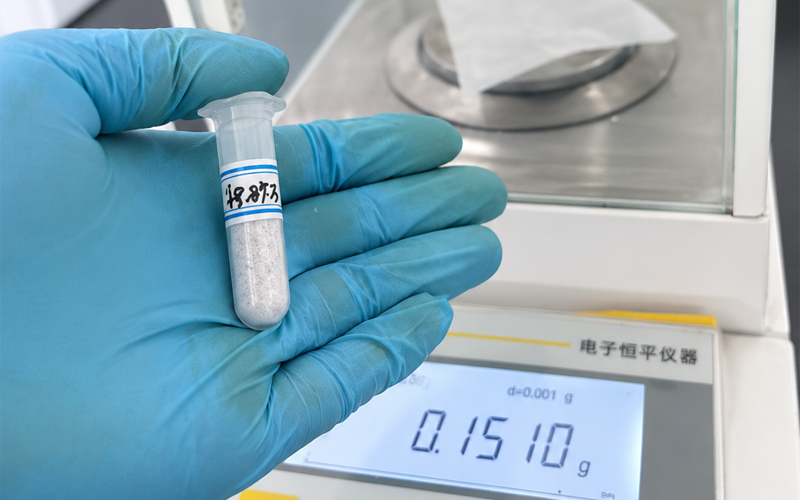
Lithium ore sample | 0.15 g per digestion vessel |
Nitric acid (HNO₃) | 5 mL, AR grade |
Hydrochloric acid (HCl) | 2 mL |
Hydrofluoric acid (HF) | 2 mL, AR grade |
4.2 Sample Preparation Procedure
Step 1: Sample Weighing
Accurately weigh 0.15 g of lithium ore sample using an analytical balance, with a weighing precision of 0.1 mg. Transfer the sample into the inner digestion vessel.
Step 2: Addition of Digestion Reagents
Add 5 mL of nitric acid, 2 mL of hydrochloric acid, and 2 mL of hydrofluoric acid to the digestion vessel in sequence, ensuring sufficient contact between the acids and the mineral sample.
Step 3: Pre-reaction
Allow the sample to stand for approximately 10 minutes after adding the reagents, giving the digestion solution sufficient time to come into contact with the sample before microwave digestion.
Step 4: Sealing and Loading
Seal the digestion vessel and mix thoroughly according to the equipment operating procedures. Place the prepared vessel into the WMD1200 microwave digestion system, configure the corresponding digestion program, and start the experiment.
4.3 Microwave Digestion Program
A three-stage heating program was used in this experiment. The digestion temperature and pressure were gradually increased to promote the reaction between the sample and digestion reagents under the programmed conditions.
Stage | Pressure (bar) | Temperature (°C) | Power (W) | Ramp Time (s) | Hold Time (s) |
Stage 1 | 10 | 120 | 1000 | 300 | 60 |
Stage 2 | 20 | 160 | 1000 | 240 | 60 |
Stage 3 | 35 | 200 | 1000 | 240 | 1500 |
The digestion program gradually increases the temperature through three stages:
Stage 1: The temperature rises to 120°C for initial acid digestion.
Stage 2: The temperature increases to 160°C to further promote reactions between the mineral components and digestion acids.
Stage 3: The temperature reaches 200°C and is maintained for 1500 seconds, allowing the sample to continue reacting under elevated temperature conditions.
By controlling temperature and pressure in stages, the digestion process follows a predefined program, reducing manual intervention and improving experimental consistency.
Experimental Results and Digestion Performance
After completion of the microwave digestion program, the condition of the sample inside the digestion vessel was observed.
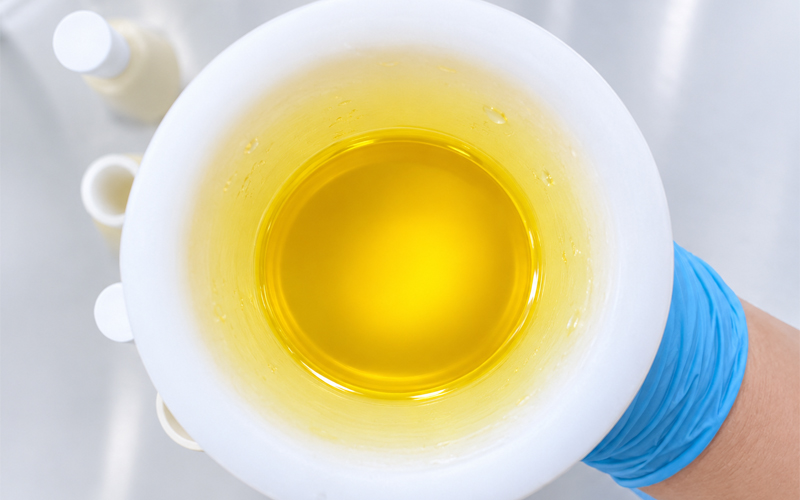
The resulting digestion solution appeared yellow and transparent, with a clear appearance and no visible precipitates or solid residues.
Based on the experimental observations, the lithium ore sample achieved a satisfactory visual dissolution result under the tested reagent composition and microwave digestion conditions.
The clear yellow solution indicates that some components of the sample have entered the liquid phase. The absence of visible precipitates provides a suitable basis for subsequent sample preparation and elemental analysis.
It should be noted that a visually clear solution alone cannot confirm the complete recovery of all target elements. Further evaluation of digestion completeness and elemental recovery requires analytical verification using methods such as ICP-OES or ICP-MS, together with residue analysis when necessary.
Conclusion: The Application Value of Microwave Digestion in Lithium Ore Sample Preparation
In this experiment, the Welso WMD1200 microwave digestion system was used for microwave-assisted acid digestion of lithium ore samples.
A 0.15 g lithium ore sample was treated with a mixture of nitric acid, hydrochloric acid, and hydrofluoric acid. A three-stage heating program was applied, reaching a final digestion temperature of 200°C, followed by the specified holding period.
After digestion, the resulting solution was yellow, transparent, and clear, with no visible precipitates. This indicates a satisfactory visual dissolution result under the tested experimental conditions.
Compared with conventional open-vessel heating methods, microwave digestion systems use a closed-vessel environment to process samples under controlled temperature and pressure conditions. This approach offers advantages such as faster heating, better control of reaction conditions, and reduced exposure to external contamination and potential volatile losses.
The Welso WMD1200 microwave digestion system can be used for the preparation of lithium ore and other geological and mineral samples, supporting mineral composition analysis, elemental determination, and related laboratory research.
Experimental Note: The digestion parameters presented in this article are specific to the lithium ore sample tested in this experiment. Actual digestion procedures should be validated and optimized according to the ore type, mineral composition, sample mass, reagent compatibility, and requirements of the subsequent analytical method.



info@welsotech.com
+86 21 51096910
Head Office: No. 439 Jinglian Road, Minhang District, Shanghai,China, 201108
Branch: 1-1009, National Industrial Design Park, No. 599 Jianzhu Road, Binhu, Wuxi , Jiangsu, China, 214062