
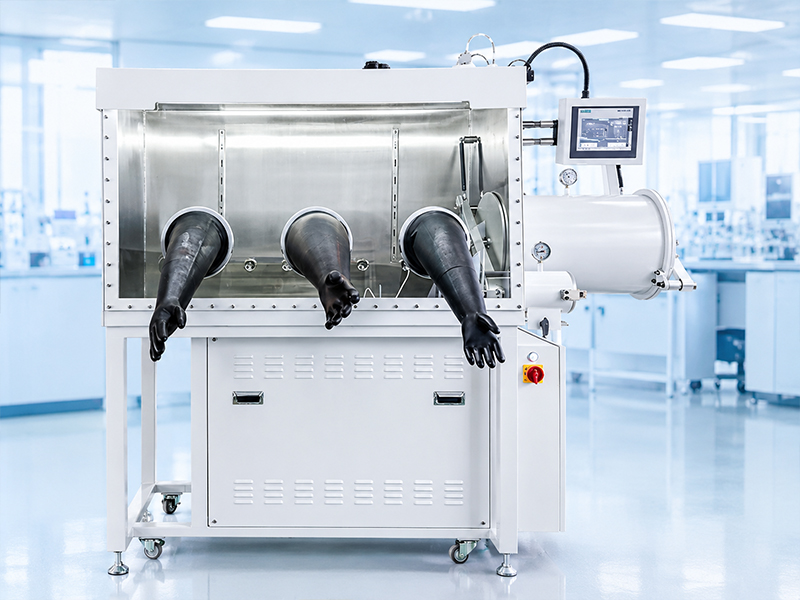
A purification glove box is designed to create and maintain a controlled atmosphere for laboratory and industrial processes. It is widely used in organometallic chemistry, organic synthesis, advanced materials research, powder handling, biomedical research, electronic component processing, solar cell manufacturing, and lithium battery material development.
For applications that require strict moisture and oxygen control, maintaining the desired atmosphere involves more than operating the gas purification system. The transfer of samples, tools, and consumables into and out of the glove box must also be carefully managed to minimize the introduction of ambient air.
A glove box antechamber is an essential component of the material transfer system. It provides an independently sealed space between the external environment and the glove box interior. Through pressure adjustment and inert gas purging, the antechamber helps reduce the amount of residual air entering the main chamber and supports stable moisture and oxygen control.
This guide explains why a purification glove box needs an antechamber, how it works, the differences between large and small antechambers, and the key considerations for operation and selection.
1. Why Does a Purification Glove Box Need an Antechamber?
When the main chamber of a glove box is directly exposed to ambient air, moisture and oxygen can enter and disturb the controlled atmosphere. This may increase the workload of the gas purification system and affect processes involving air-sensitive or moisture-sensitive materials.
A glove box antechamber helps address this challenge through a dual-door design. Before materials enter the main chamber, they are placed inside the antechamber, where the residual air is reduced through an appropriate gas replacement procedure. The materials can then be transferred into the glove box without directly exposing the main chamber to the external environment.
The main functions of a glove box antechamber include:
●Reducing air ingress: The sealed transfer space and gas purging process help minimize the introduction of ambient air during material transfer.
●Supporting moisture and oxygen control: Reducing the amount of air introduced into the glove box helps the purification system maintain the required operating conditions.
●Facilitating material transfer: The antechamber provides a dedicated passage for samples, laboratory consumables, tools, and other process materials.
●Accommodating different material sizes: Different antechamber dimensions allow users to select a suitable transfer space according to the size, shape, and handling requirements of their materials.
It is important to distinguish the antechamber's role from that of the gas purification system. The antechamber primarily provides a sealed transfer space and supports gas replacement; it is not an independent gas purification unit. Actual moisture and oxygen levels depend on several factors, including sealing performance, purging procedures, the condition of the glove box, and the operation of the purification system.
2. What Is the Difference Between the Large and Small Welso Glove Box Antechambers?
The Welso purification glove box is equipped with both a large antechamber and a small antechamber to accommodate different material transfer requirements. Both feature a dual-door design, but they differ in dimensions, operating methods, and intended applications.
2.1 Large Antechamber: For Larger Materials and Equipment
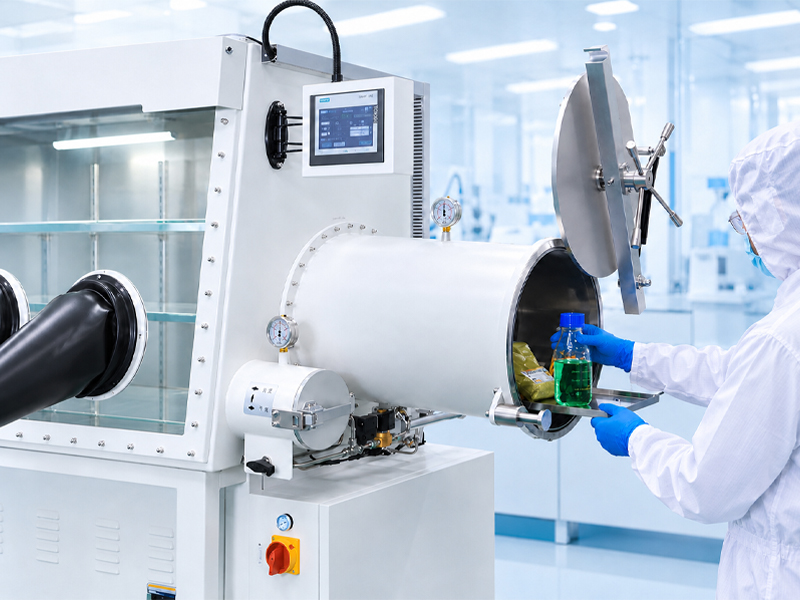
Installed on the right side of the glove box, the large antechamber provides a relatively spacious transfer area. It is equipped with a 304 stainless steel sliding tray to facilitate material loading, positioning, and removal.
It is suitable for transferring larger samples, laboratory consumables, and components such as glass bottles containing separator materials, bottle stoppers, battery casings, and similar items.
Large Glove Box Antechamber Specifications
Parameter | Specification |
Dimensions | Diameter: 385 mm × Length: 600 mm |
Main chamber material | SUS304 stainless steel |
Leakage rate | ≤0.001 Vol%/h |
Tray | 304 stainless steel sliding tray |
Door configuration | Dual-door design |
Door material | Anodized aluminum |
Door thickness | 10 mm |
Door operation | Vertical operation with a lifting mechanism |
Pressure indication | Analog pressure gauge |
Valve control | Solenoid valves controlled automatically via the touchscreen |
The large antechamber uses touchscreen control to operate the relevant solenoid valves. Depending on the equipment configuration, the system can perform the corresponding evacuation and inert gas filling operations.
The sliding tray and door lifting mechanism also help simplify material handling during loading and removal.
The specified leakage rate is a technical parameter associated with the chamber's sealing performance under defined test conditions. The applicable test method, pressure conditions, and acceptance criteria should be confirmed against the equipment documentation before comparing this value with specifications from other manufacturers.
2.2 Small Antechamber: For Small Items and Routine Transfers
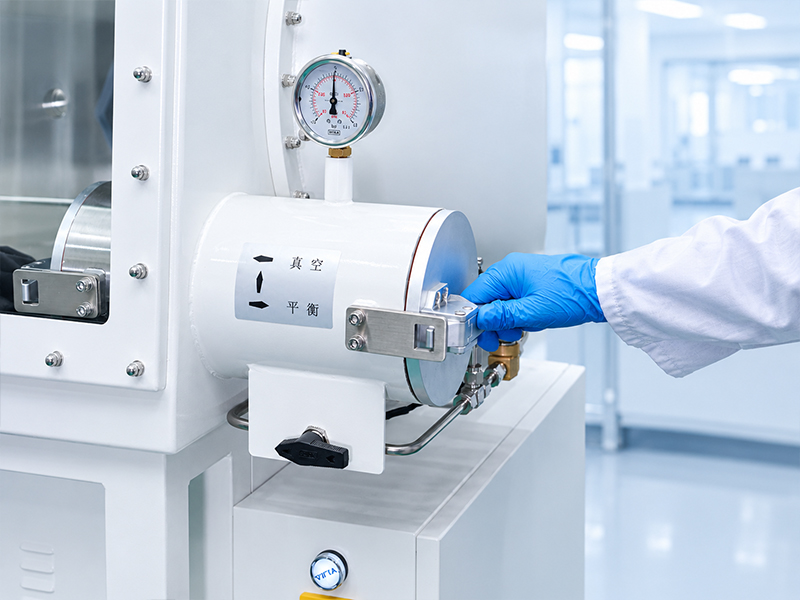
The small antechamber features a compact structure and is intended for transferring wires and other small items into and out of the glove box. It provides a convenient alternative when the larger transfer chamber is unnecessary.
Small Glove Box Antechamber Specifications
Parameter | Specification |
Dimensions | Diameter: 150 mm × Length: 300 mm |
Length extending into the glove box | 100 mm |
Main chamber material | 304 stainless steel |
Internal surface finish | Brushed finish |
External surface finish | White-painted finish |
Door configuration | Dual-door design |
Door sealing | Rubber sealing rings |
Pressure indication | Analog pressure gauge |
Valve operation | Manual valve operation |
Unlike the large antechamber, the small antechamber uses manually operated valves. Operators must follow the prescribed sequence for evacuation and inert gas filling and verify that the chamber pressure meets the specified operating requirements before proceeding with material transfer.
Its compact dimensions make it suitable for small items. However, the actual size and quantity of materials that can be transferred should be evaluated according to the usable chamber space, material geometry, and handling requirements.
3. How Does Glove Box Antechamber Gas Purging Work?
Glove box antechamber gas purging commonly involves evacuating the chamber and then filling it with an inert gas to reduce the amount of residual air. The exact procedure depends on the chamber design, valve configuration, and control system.
The following steps describe a general procedure for transferring materials into the glove box.
Step 1: Load the Materials and Close the Outer Door
Open the outer antechamber door and place the materials inside. For the large antechamber, ensure that the materials are positioned securely on the sliding tray and do not interfere with door closure or sealing.
After loading, close the outer door and check that it is properly secured. Inspect the sealing surfaces for visible damage, contamination, or other conditions that could compromise the seal.
Step 2: Evacuate the Chamber and Introduce Inert Gas
Depending on the equipment configuration, use the touchscreen to control the solenoid valves or operate the relevant manual valves to reduce the chamber pressure to the specified level.
Introduce the appropriate inert gas compatible with the glove box system. Depending on the required moisture and oxygen levels, multiple evacuation and refill cycles may be necessary to further reduce the amount of residual air.
The evacuation endpoint pressure, filling pressure, holding time, and number of cycles should be determined according to the equipment operating instructions, material characteristics, and validated process requirements. A fixed number of cycles should not be assumed to be suitable for every application.
Step 3: Verify the Chamber Conditions and Transfer the Materials
After completing the prescribed purging procedure, confirm that the chamber pressure meets the equipment requirements and that the outer door remains closed.
Once the required operating conditions have been met, open the inner door according to the equipment operating procedure and transfer the materials into the glove box. Close the inner door promptly after completing the transfer to restore the sealed configuration.
Important operating note: The inner and outer antechamber doors should not be open simultaneously. Follow the equipment's prescribed door sequence, pressure requirements, and interlocking logic to minimize the risk of disturbing the controlled atmosphere.
When removing materials from the glove box, follow the corresponding approved procedure for transferring materials through the antechamber in the opposite direction.
4. What Should You Consider When Operating a Glove Box Antechamber?
Proper operation of the glove box antechamber helps reduce air ingress and maintain stable working conditions. The following considerations are particularly important.
4.1 Follow the Correct Operating Procedure
The large antechamber uses touchscreen-controlled solenoid valves, whereas the small antechamber uses manual valves. Because their control methods differ, operators should follow the appropriate procedure for each configuration rather than applying the same sequence indiscriminately.
4.2 Inspect the Doors and Sealing Components
Before operation, check the doors, sealing rings, and relevant connections. Contaminated sealing surfaces, deteriorated seals, or improperly closed doors may compromise chamber tightness and affect the purging process.
4.3 Set Appropriate Gas Purging Parameters
For highly moisture-sensitive or oxygen-sensitive materials, determine the purging parameters according to the process requirements. Where necessary, use the glove box's moisture and oxygen monitoring readings to verify that the required atmosphere conditions have been maintained after material transfer.
4.4 Minimize Unnecessary Atmosphere Disturbances
Where process requirements permit, organize materials into suitable transfer batches and avoid unnecessary door operations. This helps reduce the risk of air ingress and the additional workload placed on the gas purification system.
5. How Do You Choose the Right Glove Box Antechamber?
Selecting a suitable glove box antechamber involves more than comparing chamber dimensions. Material characteristics, transfer frequency, operating methods, and atmosphere requirements should all be considered.
● Material dimensions: Evaluate the maximum dimensions, shape, loading method, and handling clearance required for the materials being transferred.
● Material type: A large antechamber may be more suitable for glass bottles, battery casings, and other larger items, while a small antechamber may meet the needs of wires and other small components.
● Operating method: Consider whether touchscreen-controlled solenoid valves or manually operated valves are appropriate for the intended workflow.
● Atmosphere requirements: Determine the required moisture and oxygen levels, material sensitivity, and transfer frequency when evaluating the appropriate gas purging procedure.
● System compatibility: Confirm that the antechamber is compatible with the glove box structure, vacuum equipment, inert gas supply, and control system.
A well-matched antechamber helps streamline material handling while supporting the glove box's atmosphere control requirements.
Conclusion
A glove box antechamber is an important component of a purification glove box because it provides a controlled pathway for material transfer between the external environment and the main chamber. Through a sealed structure, pressure adjustment, and inert gas purging, it helps reduce air ingress and supports the maintenance of controlled moisture and oxygen levels.
The Welso purification glove box offers large and small antechamber configurations for different material transfer requirements. Understanding their dimensions, technical specifications, and operating methods can help users select a configuration that better matches their laboratory or production workflow.
If you are planning a glove box configuration, contact Welso with details about your application, material dimensions, target moisture and oxygen levels, and transfer frequency. Our team can help evaluate a suitable equipment configuration for your requirements.
Frequently Asked Questions About Glove Box Antechambers
What is the purpose of a glove box antechamber?
A glove box antechamber provides a sealed transfer space between the external environment and the glove box interior. It allows materials to be transferred after an appropriate gas replacement procedure, helping reduce the introduction of ambient air into the main chamber.
How does an antechamber maintain a low-moisture, low-oxygen atmosphere?
The antechamber typically uses evacuation and inert gas filling to reduce residual air before materials enter the glove box. The effectiveness of this process depends on the chamber's sealing performance, purging parameters, material characteristics, and the condition of the overall glove box system.
What is the difference between a large and a small glove box antechamber?
A large antechamber provides more space for larger samples, containers, and components and may include a sliding tray. A small antechamber is designed for compact items and routine transfers. The appropriate choice depends on material dimensions, handling requirements, and the equipment configuration.
How many evacuation and refill cycles are required?
There is no single cycle count suitable for every application. The number of cycles and the relevant pressure settings should follow the equipment operating instructions and be determined according to the required atmosphere conditions and process requirements.



info@welsotech.com
+86 21 51096910
Head Office: No. 439 Jinglian Road, Minhang District, Shanghai,China, 201108
Branch: 1-1009, National Industrial Design Park, No. 599 Jianzhu Road, Binhu, Wuxi , Jiangsu, China, 214062