
Sample concentration is a common step in proteomics, peptide analysis, mass spectrometry, and biochemical research. After purification, desalting, or solvent exchange, samples often need to be concentrated to reduce volume and increase analyte concentration before downstream analysis.
For proteins and peptides, concentration conditions require careful control of temperature, vacuum, centrifugation, and processing time. Excessive heat or inappropriate concentration conditions may affect sample stability and recovery. A controlled low-temperature environment can therefore be valuable when processing temperature-sensitive samples.
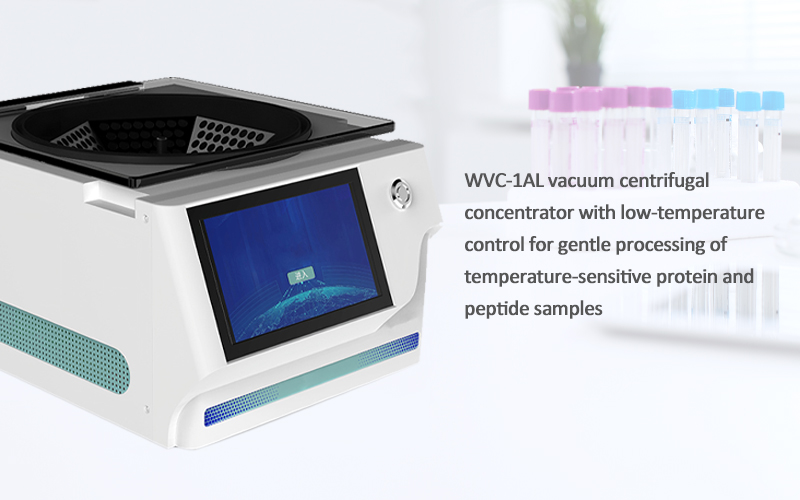
How Vacuum Centrifugal Concentration Works
Vacuum centrifugal concentration combines centrifugation, vacuum, and temperature control to remove solvents under reduced pressure.
By lowering the chamber pressure, the boiling point of the solvent is reduced, allowing evaporation to occur at relatively low temperatures. Centrifugation helps maintain stable sample positioning and can reduce bumping and splashing during evaporation.
For samples containing volatile organic solvents such as acetonitrile or methanol, temperature, vacuum conditions, and processing time can be adjusted according to the solvent system and sample characteristics. Multi-step or gradient programs can also be used when different stages of solvent removal require different conditions.
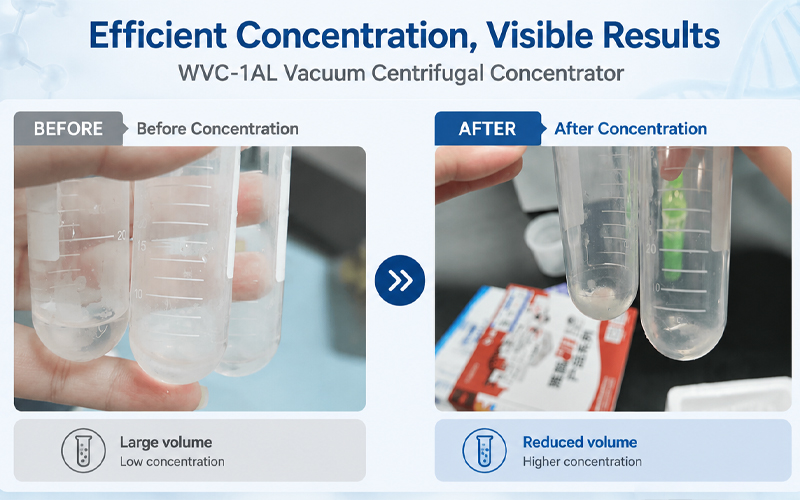
-10°C Active Cooling for Temperature-Sensitive Samples
The Welso WVC-1AL Vacuum Centrifugal Concentrator features an active cooling system with a chamber temperature range of -10°C to +100°C.
Low-temperature operation provides greater control over the sample environment during vacuum evaporation. For proteins, peptides, and other temperature-sensitive samples, suitable low-temperature conditions can help minimize unnecessary thermal exposure.
The system also supports cold trap temperatures from -50°C to -110°C, with multiple temperature options available. A low-temperature cold trap helps condense evaporated solvents and reduces the solvent load entering the vacuum system.
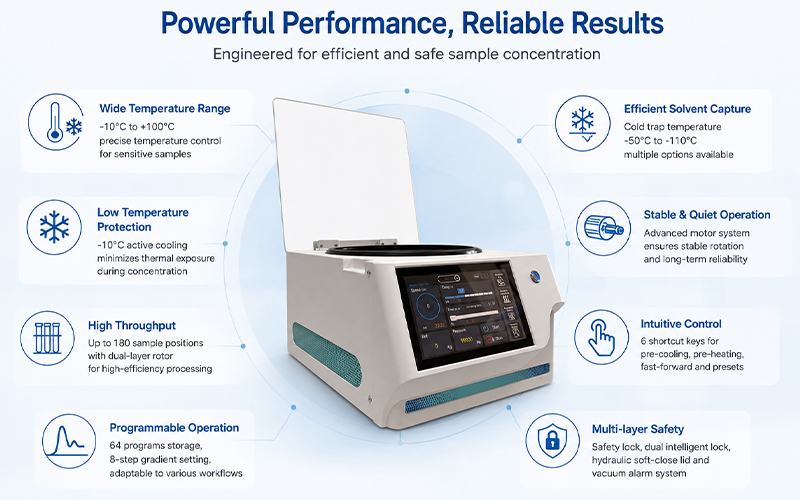
Key Features of the WVC-1AL
Wide Temperature Range
The chamber supports temperatures from -10°C to +100°C, allowing users to select appropriate conditions for different sample and solvent systems.
Up to 180 Sample Positions
The dual-layer rotor design accommodates up to 180 sample positions in a single run, making the WVC-1AL suitable for parallel processing in proteomics and other high-throughput laboratory workflows.
Programmable Gradient Concentration
The system stores up to 64 programs and supports 8-step gradient programming. Users can define different temperature and processing conditions for different stages of solvent removal.
Stable Magnetic-Levitation Drive
An imported magnetic-levitation motor provides stable rotor operation, while the compact integrated design helps save laboratory bench space.
Convenient Program Operation
Six dedicated shortcut keys provide quick access to pre-cooling, pre-heating, fast-forward, and preset programs. Processing time can be set from 0 to 9999 hours and 59 minutes.
Safety and Monitoring
The WVC-1AL incorporates a safety lock, dual intelligent locking system, hydraulic lid lowering, and electromagnetic interlock. Real-time vacuum monitoring and alarms help identify abnormal vacuum conditions during operation.
Optional UV sterilization and synchronized centrifuge imaging lights are available for specific laboratory applications.
Practical Considerations for Protein and Peptide Concentration
The optimal concentration conditions depend on the sample composition, solvent system, and downstream application.
Temperature: Use appropriate low-temperature conditions for heat-sensitive samples and optimize the temperature according to sample stability.
Sample volume: Avoid overfilling sample tubes. A filling volume of no more than approximately two-thirds of the tube capacity can provide sufficient headspace for evaporation.
Solvent composition: Consider the volatility of solvents such as acetonitrile and methanol when setting temperature, vacuum, and processing parameters.
Concentration endpoint: Avoid unnecessary over-concentration, which may increase adsorption to tube surfaces or make sample reconstitution more difficult. The endpoint should be determined according to the required final concentration and downstream application.
Efficient Batch Processing for Proteomics and Peptide Research
Proteomics and peptide workflows often involve multiple samples that need to be processed under consistent conditions. With up to 180 sample positions, programmable temperature and time settings, and gradient concentration capabilities, the WVC-1AL supports parallel sample processing while reducing repetitive manual operations.
The system can be used for sample preparation prior to mass spectrometry, lyophilization, biochemical analysis, and other downstream applications where controlled solvent removal is required.
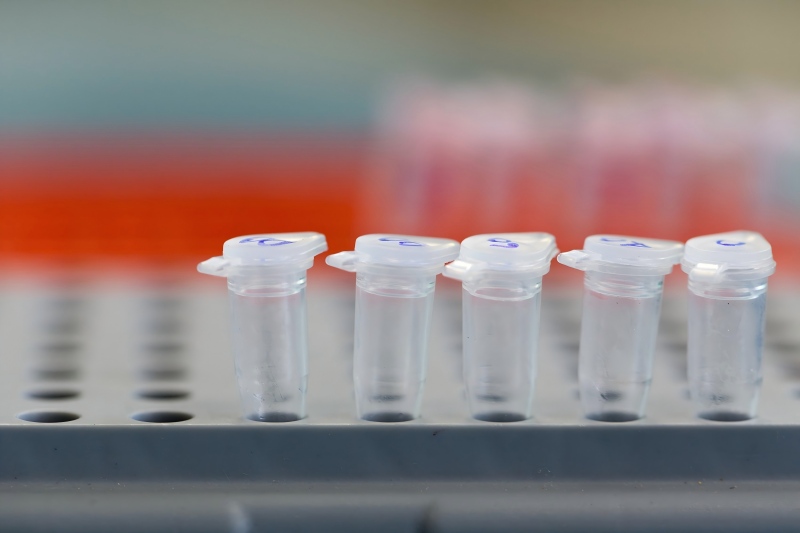
For protein and peptide samples, effective concentration requires a balance between solvent removal efficiency, temperature control, sample stability, and processing capacity.
With -10°C active cooling, vacuum centrifugal concentration, programmable gradient control, and up to 180 sample positions, the Welso WVC-1AL provides a controlled solution for low-temperature concentration of proteins, peptides, and other laboratory samples.
Learn more about the WVC-1AL Vacuum Centrifugal Concentrator, including technical specifications, rotor configurations, and available options, on the product page.



info@welsotech.com
+86 21 51096910
Head Office: No. 439 Jinglian Road, Minhang District, Shanghai,China, 201108
Branch: 1-1009, National Industrial Design Park, No. 599 Jianzhu Road, Binhu, Wuxi , Jiangsu, China, 214062