
DHA (Docosahexaenoic Acid) is an important Omega-3 polyunsaturated fatty acid widely known as “Brain Gold” due to its critical role in brain and visual development. DHA is a major structural component of the nervous system and is highly concentrated in the human cerebral cortex, accounting for approximately 20% of its fatty acid content. In the retina, DHA content is even higher, reaching around 50%, making it essential for infant intellectual development, visual formation, and nervous system health.

Compared with conventional fish oil sources, DHA algal oil is directly extracted from marine microalgae without passing through the marine food chain, offering lower risks of heavy metal contamination and improved safety. In addition, its low EPA content makes it particularly suitable for infant nutrition and high-end health products.
To accurately determine the content of heavy metal elements in DHA algal oil, an efficient and reliable sample pretreatment method is required. In this study, the Welso microwave digestion system was used for the digestion of DHA algal oil samples. By optimizing the digestion parameters, complete sample digestion was achieved, providing a stable and reliable pretreatment solution for subsequent ICP-MS and ICP-OES elemental analysis.
1. Instruments and Reagents
1.1 Instruments
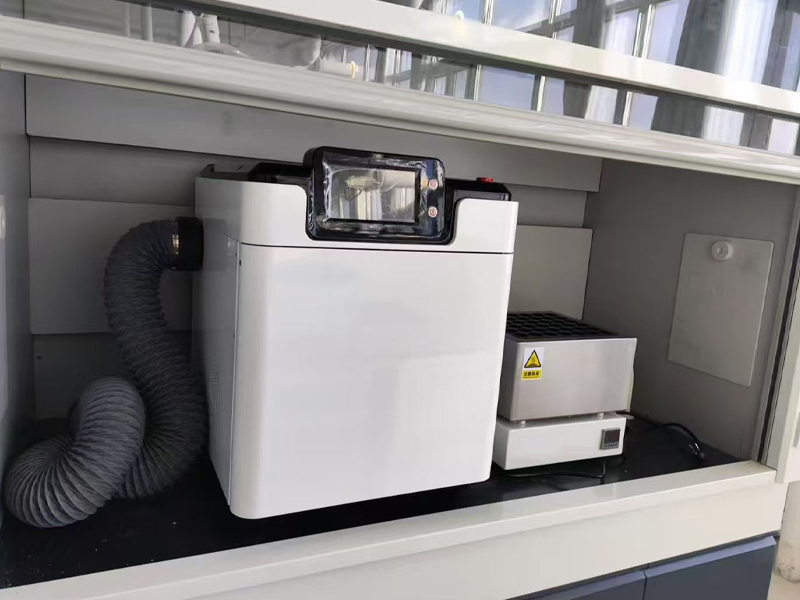
Welso Microwave Digestion System
Acid Removal System
Analytical Balance (0.1 mg readability)
PTFE Digestion Vessels
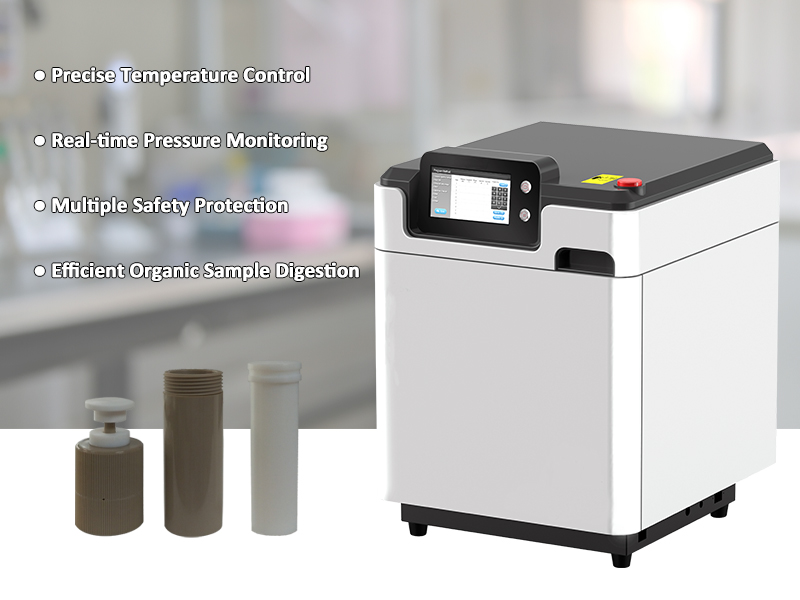
The Welso microwave digestion system adopts a high-precision temperature and pressure dual-control system, enabling real-time monitoring of digestion conditions throughout the process. This ensures safe and stable operation for high-fat samples under high-temperature and high-pressure environments. Equipped with multiple safety protection mechanisms and high-pressure-resistant digestion vessels, the system effectively improves digestion efficiency for organic samples while reducing blank values and enhancing element recovery rates.
1.2 Reagents
Nitric Acid (68%, GR Grade)
2. Experimental Method
2.1 Initial Digestion Experiment
Approximately 0.2 g of DHA algal oil sample (accurate to 0.1 mg) was weighed into the digestion vessel, followed by the addition of 8 mL nitric acid. After standing for 15 minutes, the digestion vessel was assembled and subjected to programmed microwave digestion using the Welso microwave digestion system.
Microwave Digestion Program
Stage | Temperature (°C) | Hold Time (min) |
1 | 150 | 5 |
2 | 180 | 5 |
3 | 200 | 30 |
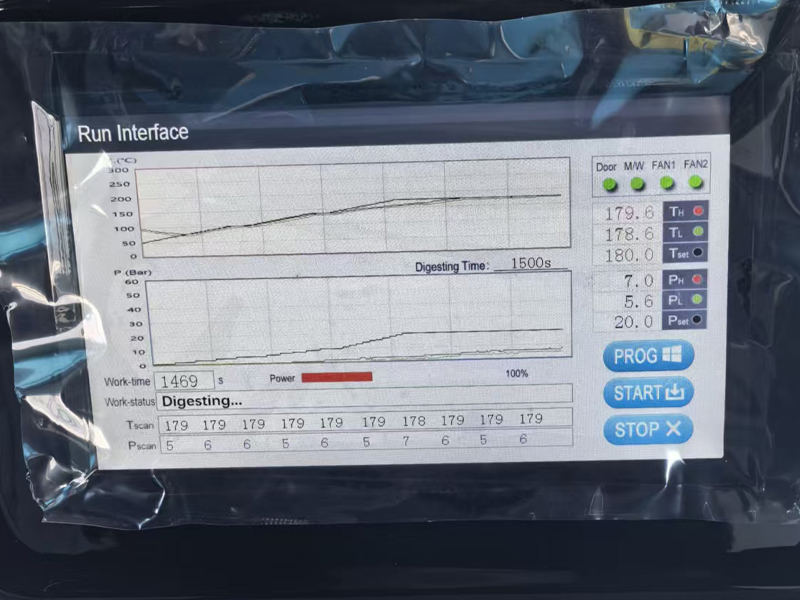
During the experiment, DHA algal oil, being a high-fat organic sample, reacted vigorously, causing rapid pressure buildup inside the digestion vessel. The system automatically triggered its safety protection mechanism, and the experiment was terminated.
2.2 Optimization of Digestion Parameters
To reduce the instantaneous pressure generated during closed-vessel digestion of high-fat samples, a pre-digestion step was introduced.
Approximately 0.2 g of DHA algal oil sample was reweighed, and 8 mL nitric acid was added. The digestion vessel was then placed on an acid removal system and pretreated at 120°C for approximately 30 minutes. After the yellow fumes were nearly exhausted, the vessel was removed and cooled, followed by the addition of another 2 mL nitric acid. The digestion vessel was then assembled for microwave digestion.
Optimized Microwave Digestion Program
Stage | Temperature (°C) | Hold Time (min) |
1 | 150 | 5 |
2 | 180 | 5 |
3 | 200 | 30 |
After digestion, the vessels were cooled to below 60°C before being transferred to a fume hood and carefully opened. The digestion solution was further heated on the acid removal system at 150°C until the volume was reduced to approximately 0.5 mL. Finally, the solution was transferred to a beaker and diluted with deionized water.
The final digestion solution was clear and transparent with no visible residues, indicating complete digestion of the sample and suitability for subsequent heavy metal analysis.
3. Results and Discussion
DHA algal oil is a typical high-organic and high-fat sample that can undergo vigorous oxidation reactions during microwave digestion, leading to rapid pressure increases inside the digestion vessel. Experimental results demonstrated that direct closed-vessel digestion could easily trigger overpressure protection, negatively affecting digestion stability.
By adopting a combined “pre-digestion + microwave digestion” approach, the intensity of the instantaneous organic reaction was effectively reduced, significantly improving digestion stability. With the precise temperature control and pressure monitoring system of the Welso microwave digestion system, stable digestion at 200°C for 30 minutes was successfully achieved, resulting in a clear and transparent digestion solution.
The Welso microwave digestion system offers several advantages for the pretreatment of high-fat and organic samples:
High-precision temperature and pressure control for excellent experimental reproducibility
Multiple safety and explosion-proof protection designs for safer high-pressure digestion
High digestion efficiency, reducing sample pretreatment time
Low blank values, suitable for trace heavy metal analysis
Widely applicable for food, health supplements, oils, and biological samples
This method features stable operation, high recovery rates, and low blank values, providing a reliable pretreatment solution for heavy metal analysis in DHA algal oil and similar oil-based samples.



info@welsotech.com
+86 21 51096910
Head Office: No. 439 Jinglian Road, Minhang District, Shanghai,China, 201108
Branch: 1-1009, National Industrial Design Park, No. 599 Jianzhu Road, Binhu, Wuxi , Jiangsu, China, 214062