
In laboratory analysis, industrial production, and quality inspection, weighing is one of the most fundamental and critical operations. With the advancement of electronic technology, traditional mechanical balances have gradually been replaced by high-precision digital electronic balances.
As a professional laboratory instrument supplier, Welso provides a wide range of electronic balances designed to meet diverse application requirements in scientific research, industrial testing, and quality control.
Working Principle of Digital Electronic Balances
A digital electronic balance is an intelligent weighing device based on high-stability sensors and high-precision analog-to-digital (A/D) conversion circuits. The sensor detects changes in mass and converts them into electrical signals. These signals are then processed by a microcontroller and displayed digitally on the screen.
Compared with traditional mechanical balances, modern electronic balances offer several advantages:
● Fast weighing response
● High stability and excellent repeatability
● Simple operation with digital display
● Support for multiple functional extensions
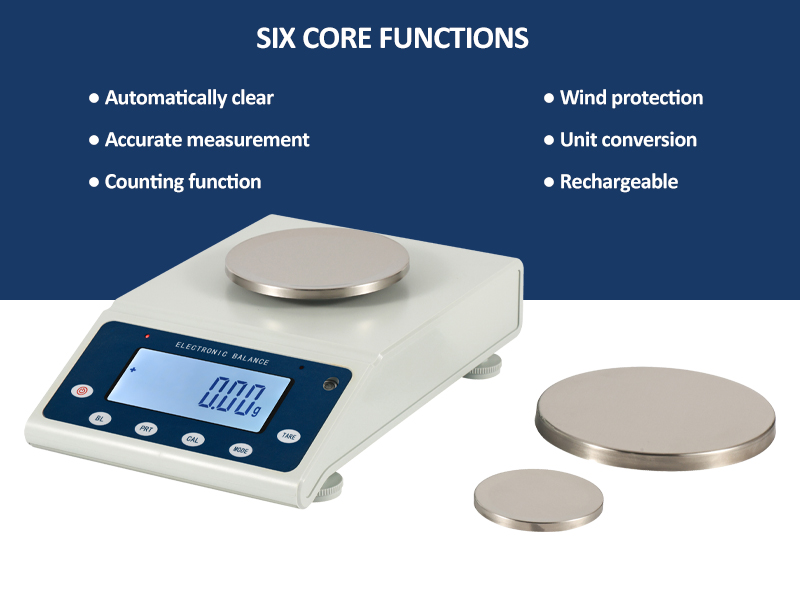
Welso electronic balances typically integrate a variety of practical features, including:
● Unit conversion
● Counting function
● Percentage weighing
● Dynamic weighing
● RS232 data communication interface
● AC/DC dual power supply
● Data storage and output
Thanks to their stable and reliable performance, these devices are widely used in industrial testing, agricultural research, commercial weighing, and educational laboratories.
Common Types of Laboratory Balances
Laboratory balances can generally be classified into several categories according to weighing accuracy and application requirements.
Electronic Balance
Electronic balances are the most common weighing devices used in laboratories. They measure mass through electronic sensors combined with a digital display system.
These balances provide good sensitivity and stability and are suitable for routine laboratory weighing, sample preparation, and general quality inspection tasks.
Modern electronic balances are often equipped with automatic calibration programs and data management systems, which help improve both weighing efficiency and data reliability.

Analytical Balance
Analytical balances are designed for high-precision weighing of very small samples, with a resolution typically reaching 0.1 mg or higher.
Due to their extremely high accuracy, analytical balances are widely used in:
● Chemical analysis laboratories
● Pharmaceutical research and development
● Biological research
● Materials testing
Analytical balances can detect extremely small changes in mass and therefore play an essential role in scientific research environments.
Precision Balance
Precision balances offer a good balance between accuracy and weighing capacity. They provide relatively high precision while allowing a wider weighing range.
Common precision levels include:
● 1 mg
● 0.01 g
● 0.1 g
These balances are suitable for sample weighing, quality inspection, and routine laboratory analysis, making them one of the most commonly used laboratory instruments.
Micro Balance
Micro balances are specifically designed for ultra-small sample weighing and can achieve microgram-level resolution.
Typical applications include:
● Micro-dose pharmaceutical research
● High-precision chemical reagent weighing
● Biological sample analysis
Because of their extremely high sensitivity, micro balances generally require stable, low-vibration laboratory environments.

High-Throughput Balance
High-throughput balances are designed for environments where large numbers of samples must be processed simultaneously. These systems are often integrated with automatic sample feeding mechanisms and data management software, significantly improving laboratory efficiency.
Typical applications include:
● Quality inspection in the pharmaceutical industry
● Food safety testing
● Quality control in chemical manufacturing
How to Choose the Right Laboratory Balance
When selecting a balance, the required weighing accuracy should be determined first. The appropriate type of instrument can then be selected according to the specific application scenario. Choosing a balance with excessively high or insufficient precision may affect both operational efficiency and cost control.
Generally, balances can be selected according to the following accuracy ranges:
Balance Type | Actual Division Value | Common Name |
Analytical Balance | 0.1 mg | 0.0001 g balance |
Precision Balance | 1 mg | 0.001 g balance |
Electronic Balance | 0.01 g / 0.1 g | 0.01 g or 0.1 g balance |
Selecting the appropriate balance not only improves laboratory efficiency but also ensures the reliability of weighing results.
Structural Differences Between Analytical Balances and Precision Balances
Although both analytical balances and precision balances belong to the category of high-precision weighing equipment, they differ significantly in structural design and environmental requirements.
Draft Shield Design
The draft shield is the most recognizable external feature of an analytical balance. Most analytical balances are equipped with a fully enclosed or three-side opening glass draft shield designed to minimize airflow disturbances.
During microgram-level measurements, even slight air movement or human breathing can cause fluctuations in readings. Therefore, maintaining a stable weighing environment is essential.
In contrast, precision balances usually adopt open or semi-enclosed designs, which are less sensitive to environmental airflow.
Sensor and Calibration System
Analytical balances typically use high-performance single-module sensors and are equipped with automatic internal calibration systems.
Through built-in calibration weights and drive mechanisms, the system can automatically perform calibration based on time intervals or temperature changes, minimizing human intervention and potential errors.
Precision balances, on the other hand, often rely on external calibration weights and are designed with greater emphasis on durability and higher weighing capacity.
Anti-Vibration and Environmental Requirements
Because analytical balances operate at extremely high precision levels, they require strict environmental stability. These instruments are usually placed on dedicated anti-vibration balance tables to minimize the influence of floor vibration.
Precision balances also require stable platforms, but their sensitivity to environmental vibration is generally lower.
Design Advantages of Welso Electronic Balances
Welso is committed to providing reliable and stable weighing solutions for laboratories. Its electronic balances incorporate multiple optimizations in both structural design and user experience.
Capacitive Touch Buttons
The balances use capacitive touch-sensing buttons, allowing operation with a simple touch. Even when wearing laboratory gloves, users can operate the device easily.
This design also prevents residue accumulation often seen with traditional mechanical buttons, helping extend the service life of the instrument.
Additionally, the non-contact operation during calibration helps reduce vibration caused by manual interaction, improving weighing stability.
High-Definition Backlit Display
Welso electronic balances feature a large LCD backlit display, ensuring clear and easy reading of measurement results.
The product design follows a modern industrial style, combining curved side elements with refined surface finishing to achieve both functionality and aesthetic appeal.
High-Stability Structural Design
The base of the balance is made of thickened aluminum alloy, with a bottom thickness of up to 3.8 mm. Compared with standard plastic bases, this structure provides greater stability and vibration resistance, improving overall weighing accuracy.

Flexible Functional Expansion
To accommodate different application requirements, Welso electronic balances support a variety of optional features, such as:
● RS232 interface for connection to computers or printers
● Optional color touchscreen display
● Data transmission and storage functions
● Rechargeable battery or dry battery operation
● Under-hook weighing capability
These features enable the balances to adapt to laboratories, industrial inspection environments, and field weighing applications.
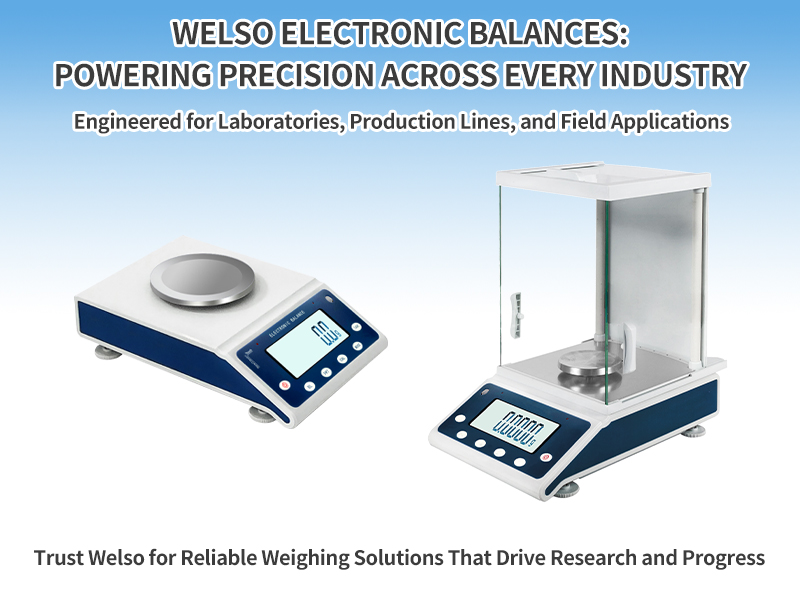
Welso Electronic Balances Supporting Scientific Research and Industrial Development
In modern laboratories and industrial production environments, accurate and reliable weighing equipment is essential for ensuring data quality.
By continuously optimizing sensor technology, structural design, and intelligent control systems, Welso provides stable, efficient, and reliable weighing solutions for its customers.
Whether for micro-scale analytical experiments or routine quality inspection, Welso electronic balances provide dependable support for both scientific research and industrial advancement.



info@welsotech.com
+86 21 51096910
Head Office: No. 439 Jinglian Road, Minhang District, Shanghai,China, 201108
Branch: 1-1009, National Industrial Design Park, No. 599 Jianzhu Road, Binhu, Wuxi , Jiangsu, China, 214062